
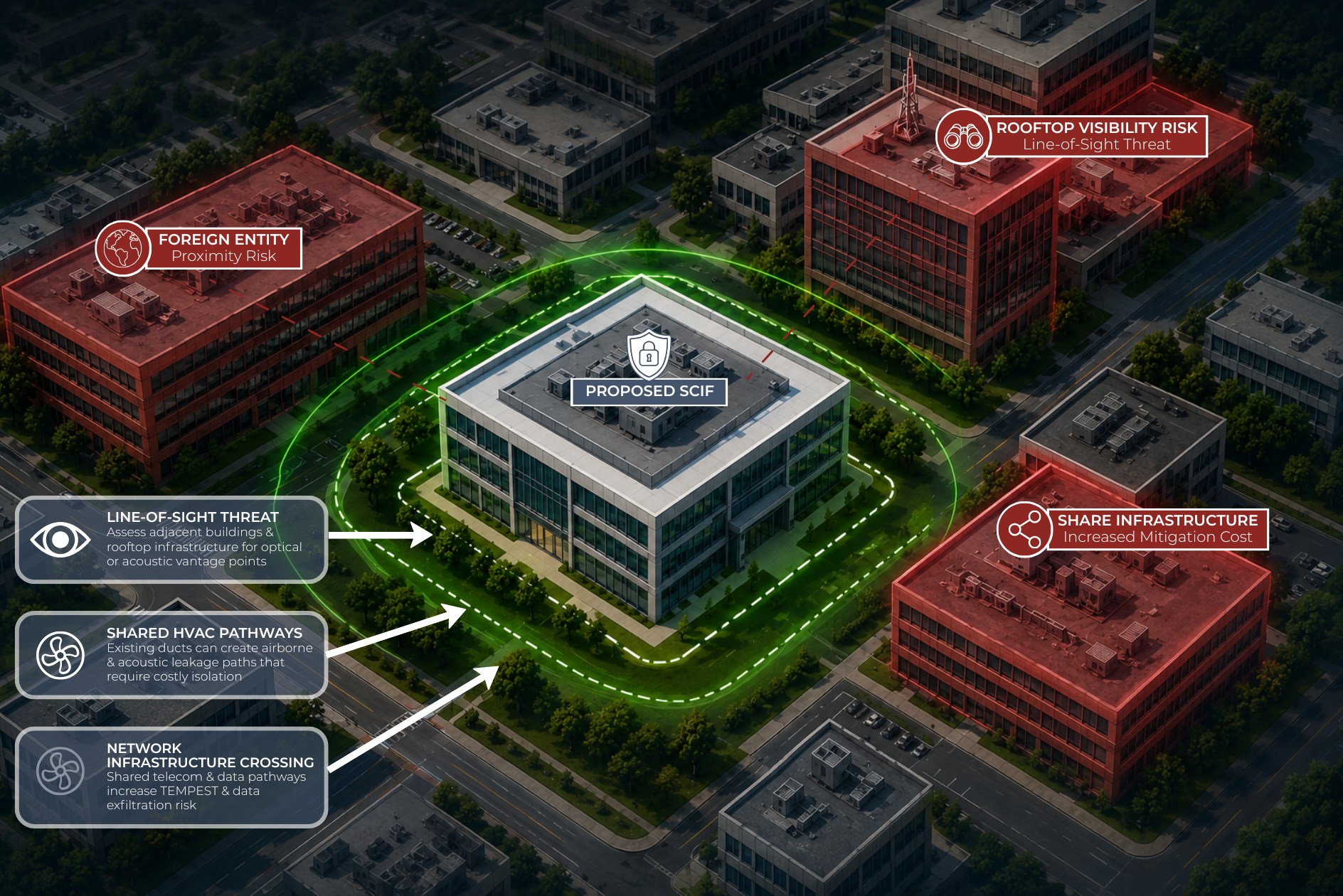
When organizations begin planning a Sensitive Compartmented Information Facility (SCIF), discussions often focus on physical security requirements, acoustic protection, access control, RF shielding, and technical safeguards.
However, one of the most important decisions occurs long before construction begins: site selection.
The location of a SCIF can directly impact security risk, project costs, construction complexity, accreditation timelines, and long-term operational performance. A site that appears ideal from a real estate perspective may introduce challenges that require significant mitigation measures during design and construction.
By evaluating potential risks early in the process, organizations can make informed decisions that support both security objectives and project success.
Here are several key considerations when selecting a site for a SCIF.
1. The Understand the Surrounding Environments
The physical security of a SCIF isn’t just about what is inside your walls; it’s about what is happening outside of them.
Too often, site selection is driven by real estate availability or proximity to existing offices, without a thorough investigation of the surrounding tenants. When vetting a potential site, you must conduct robust due diligence on neighboring entities. Uncle Sam will ask for this list, so have it handy.
By performing this diligence early, you can avoid sites that require massive, expensive countermeasures to defend against external environmental threats that are simply too risky to manage.
2. The “Six-Sided Box” and the Cost of Mitigation
Don’t underestimate the cost of “dirty” infrastructure. When evaluating a site, look past the floor space and map the building’s veins: where does the plumbing run? How are the HVAC ducts configured? Are there existing network cable pathways that cross your intended footprint? Each of these represents a point of entry that requires TEMPEST mitigation or specialized acoustic isolation. If you select a site burdened by shared building infrastructure, your project costs can skyrocket as you struggle to isolate the “box” from the rest of the entanglement of the building’s shared mechanical and digital systems.
3. The Proactive ROI
Security is often viewed as a cost center, but smart site selection is a value-add.
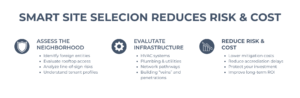
When you prioritize site security early, you can achieve:
The Bottom Line
SCIF construction is a significant investment, and successful projects begin long before the first wall is framed.
Site selection should be viewed as a strategic security decision that influences everything from design and construction costs to accreditation timelines and long-term facility performance.
By carefully evaluating the surrounding environment, existing building infrastructure, and potential mitigation requirements early in the process, organizations can reduce risk, improve project outcomes, and position their SCIF for long-term success.
At Bognet Construction, we work with owners, security teams, and design partners to identify potential challenges early and develop construction strategies that support secure, compliant, and efficient project delivery from day one.
Technical insights provided by Adriel Cardona, Vice President of Secure Construction.